Bilingual Class 5 EVS Chapter 9 Notes Food – Essence of Life | KSEEB Solutions | www.notes.studymanzil.com
Bilingual Class 5 EVS Chapter 9 Notes Food – Essence of Life
Notes By : SYED RASOOL
Bilingual Class 5 EVS Chapter 9 Notes Food – Essence of Life | KSEEB Solutions
KSEEB Solutions for Bilingual Class 5 EVS Chapter 9 Food – Essence of Life is provided below to help Class 5 students understand the lesson more effectively. The KSEEB Solutions for Class 5 EVS are prepared by subject teachers according to the new KSEEB Class 5 EVS syllabus in Bilingual English and Urdu.
Tags: 5th EVS Chapter 2 question Answer, 5th EVS Notes, 5th EVS Notes Food – Essence of Life question answer, Bilingual class 5 EVS notes,5th EVS question answer chapter Food – Essence of Life , KSEEB solutions class 5 EVS, Food – Essence of Life notes, Food – Essence of Life question answer class 5, fifth Enviornmental Science question answers, Notes Class5 EVS Lesson Food – Essence of Life
Get comprehensive bilingual English and Urdu revision notes along with complete page-by-page textbook solutions for Class 5 Environmental Studies (EVS) Chapter 9: Food – Essence of Life under the Karnataka State Syllabus.
Bilingual Class 5 EVS Chapter 9 Notes Food – Essence of Life | KSEEB Solutions | www.notes.studymanzil.com
The Class 5 EVS Bilingual, KSEEB Solutions For Class 5 EVS Lesson Food – Essence of Life offered here serves as a comprehensive guide to grasp essential topics thoroughly. Crafted to facilitate a deep understanding of the lessons, these solutions are tailored to enhance comprehension. By utilizing these resolved KSEEB Solutions for Class 5 EVS Bilingual English Urdu Medium, students can not only achieve commendable marks but also reinforce their retention of the subject matter over an extended period. Explore these user-friendly solutions to excel in Class 5 EVS studies.
Notes Class 5 EVS Lesson Dunia
Table of Contents
Video Lesson Class 5 EVS Bilingual Chapter 9: Food Essence of life | in Urdu | پنجم جماعت ماحولیاتی مطالعہ
Part 1: Quick Revision Notes
Lesson 9: Food – Essence of Life (Short Notes for Class 5)
1. Importance of Food
- Food is the essence of our life.
- It gives us energy to do work every day.
- It helps in our growth, body repair, and good health.
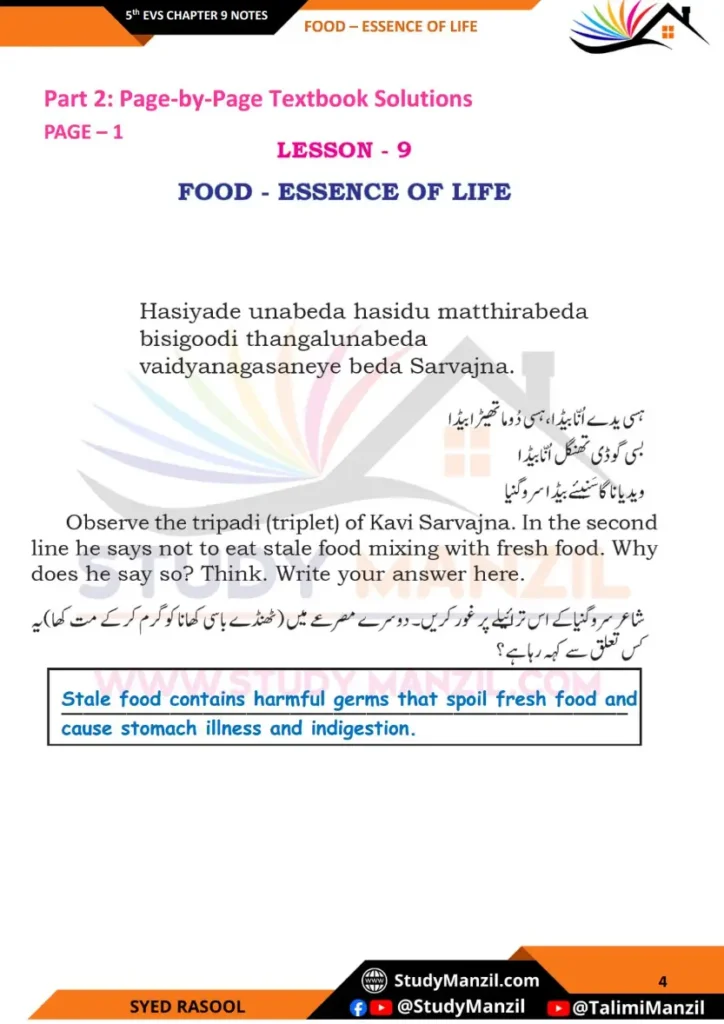
- Kavi Sarvajna’s Advice: Never eat stale (old) food mixed with fresh hot food, and eat only when you are hungry to stay healthy.
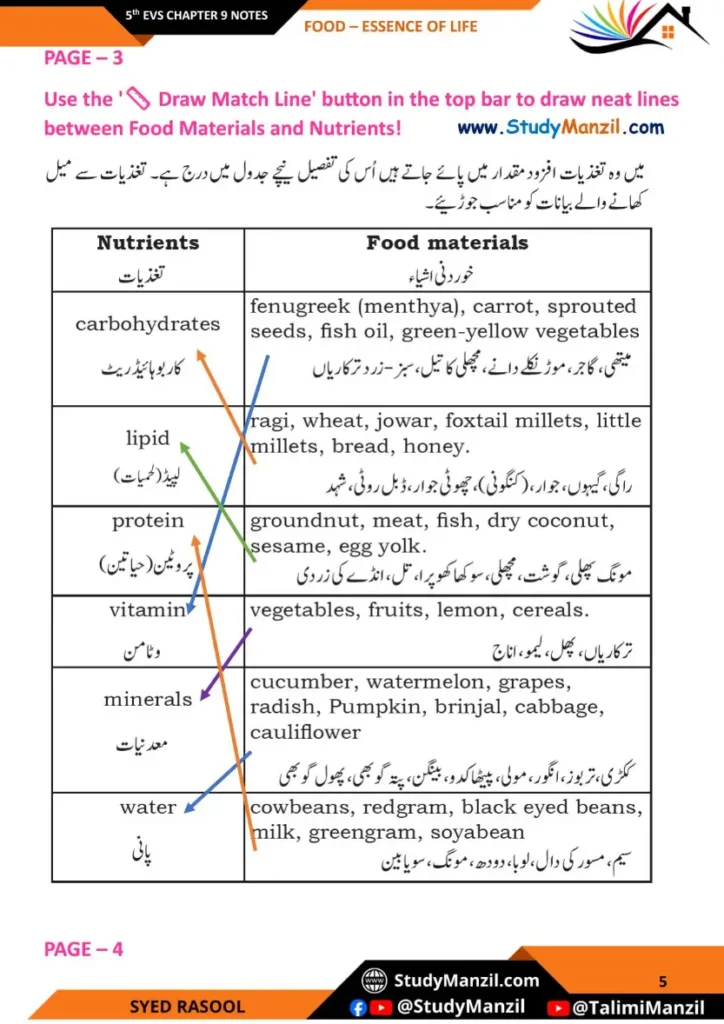
2. Nutrients in Food
Our body needs all 6 nutrients to stay healthy:
- Carbohydrates: Ragi, wheat, jowar, millets, bread, honey.
- Proteins: Pulses (redgram, greengram), milk, soyabean.
- Lipids (Fats): Groundnut, meat, fish, dry coconut, sesame, egg yolk.
- Vitamins: Carrot, sprouted seeds, fish oil, fenugreek (menthya), green-yellow vegetables.
- Minerals: Vegetables, fruits, lemon, cereals.
- Water: Cucumber, watermelon, grapes, radish, pumpkin, cabbage.
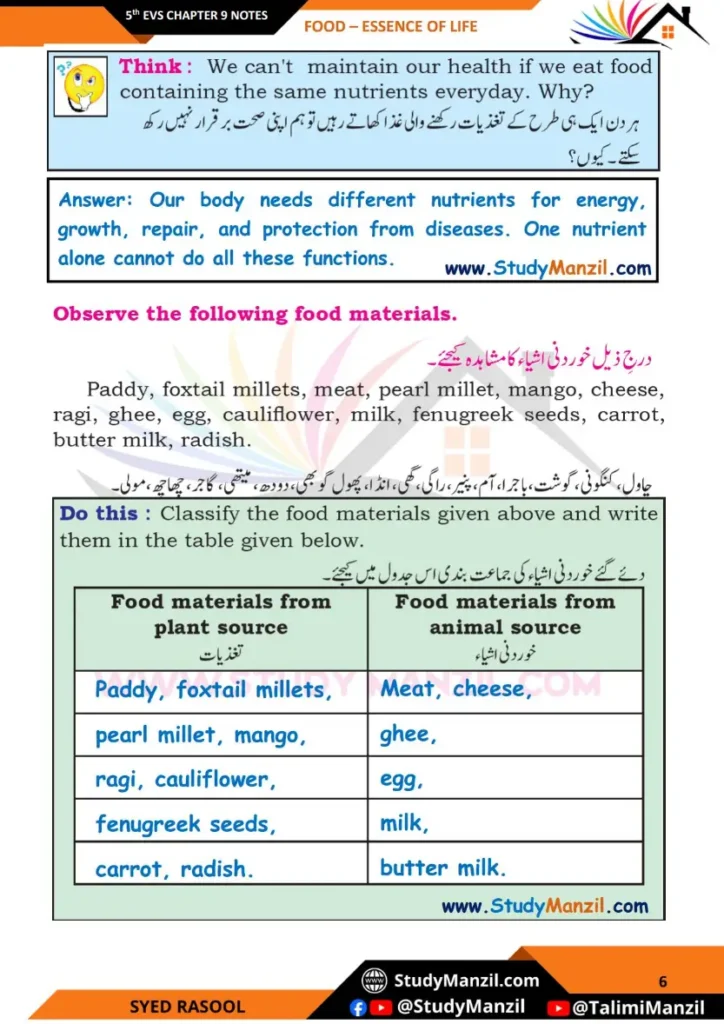
3. Sources of Food
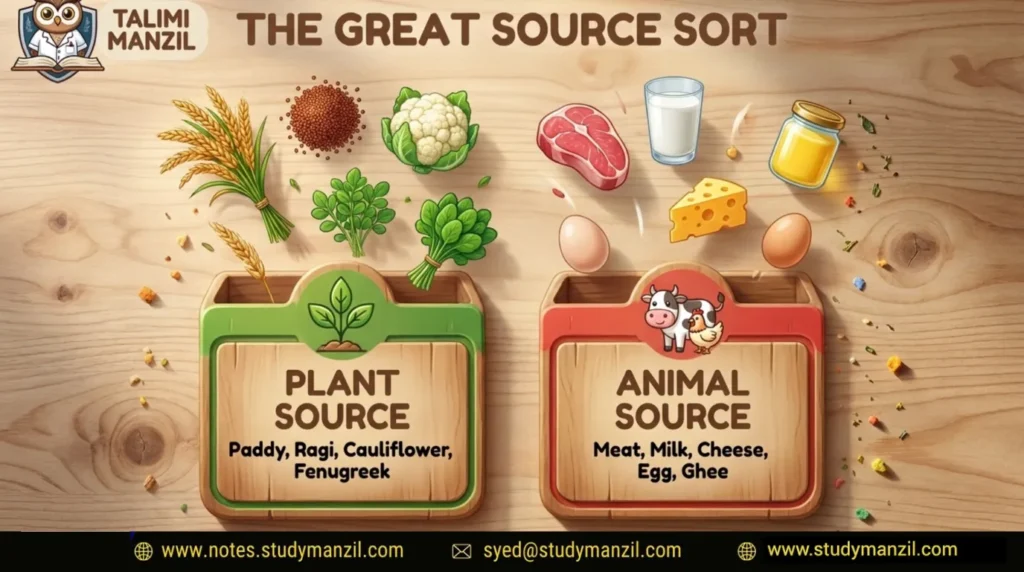
We get food from two main sources:
- Plant Source: Paddy, ragi, mango, carrot, radish, fenugreek, cauliflower.
- Animal Source: Milk, buttermilk, ghee, cheese, egg, meat, fish.
6 Types of Plant Foods:
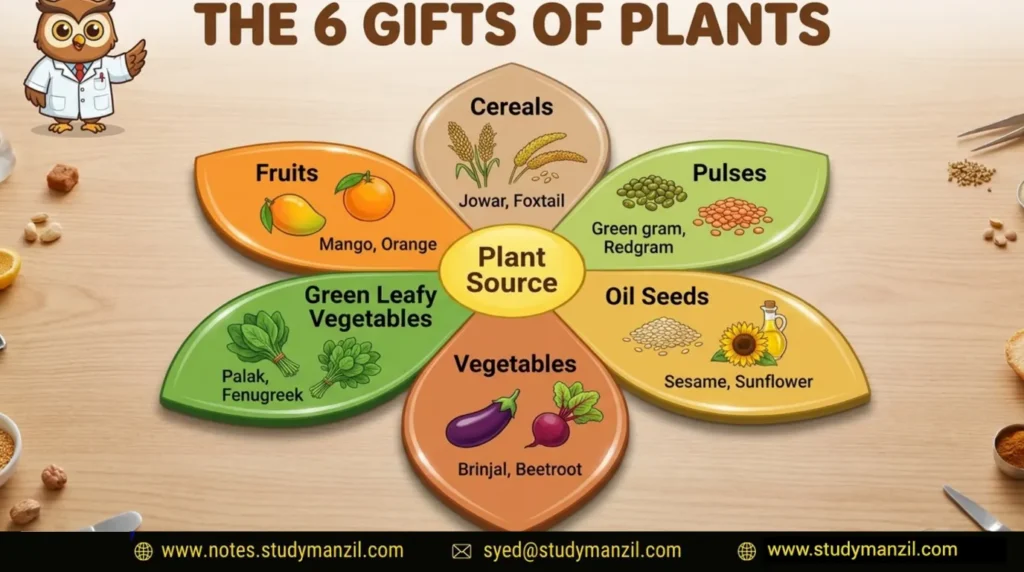
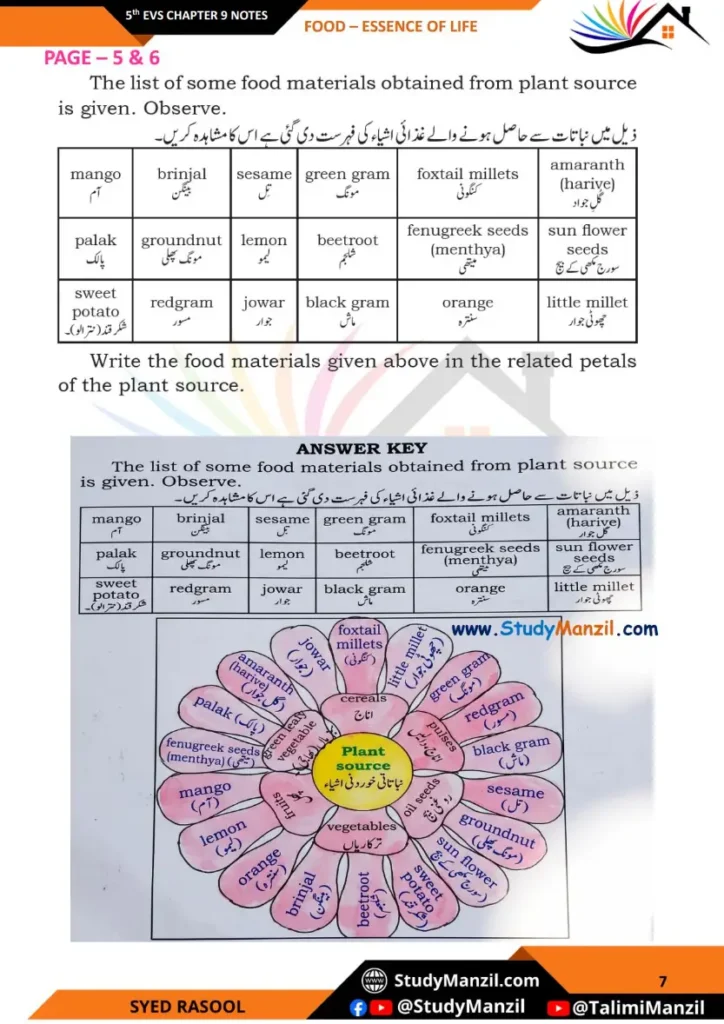
- Cereals: Jowar, foxtail millet, little millet.
- Pulses: Green gram, redgram, black gram.
- Oil Seeds: Groundnut, sesame, sunflower seeds.
- Vegetables: Brinjal, beetroot, sweet potato.
- Green Leafy Vegetables: Palak, amaranth (harive), fenugreek (menthya).
- Fruits: Mango, lemon, orange.
4. Millets (Friends of Famine)
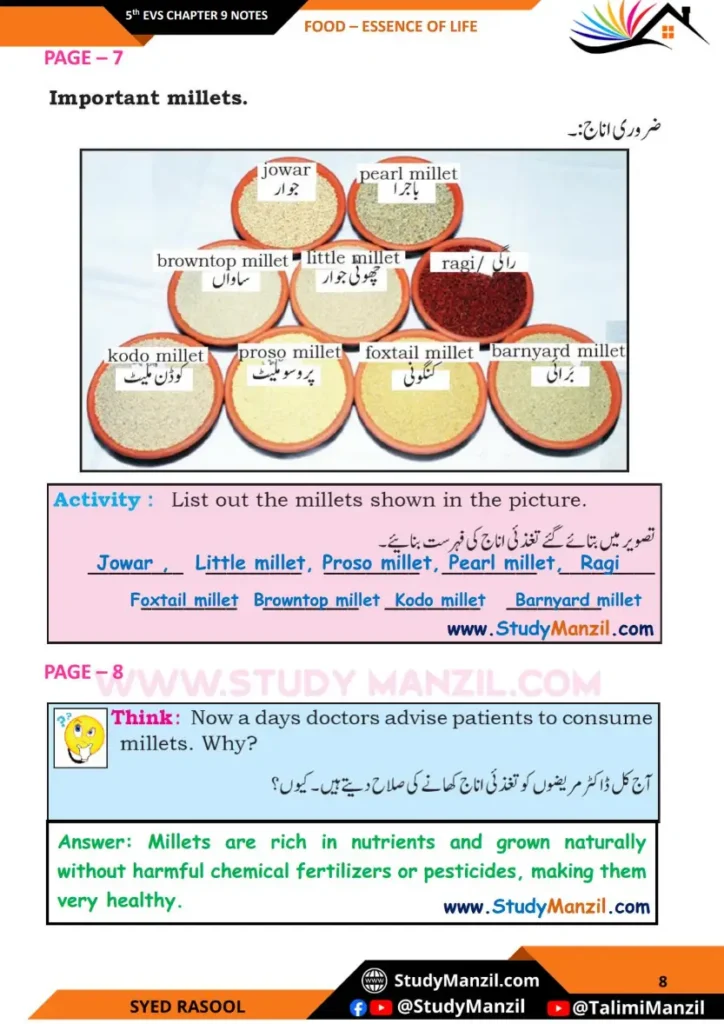
- Examples: Jowar, ragi, pearl millet (bajra), foxtail millet, little millet, kodo millet, proso millet, barnyard millet, browntop millet.
- Why Millets are Special:
- They are called the “barn of nutrients” and “friends of famine”.
- They grow quickly using less water in any climate.
- They grow naturally without chemical fertilizers or pesticides.
5. Government Steps to Provide Food for All
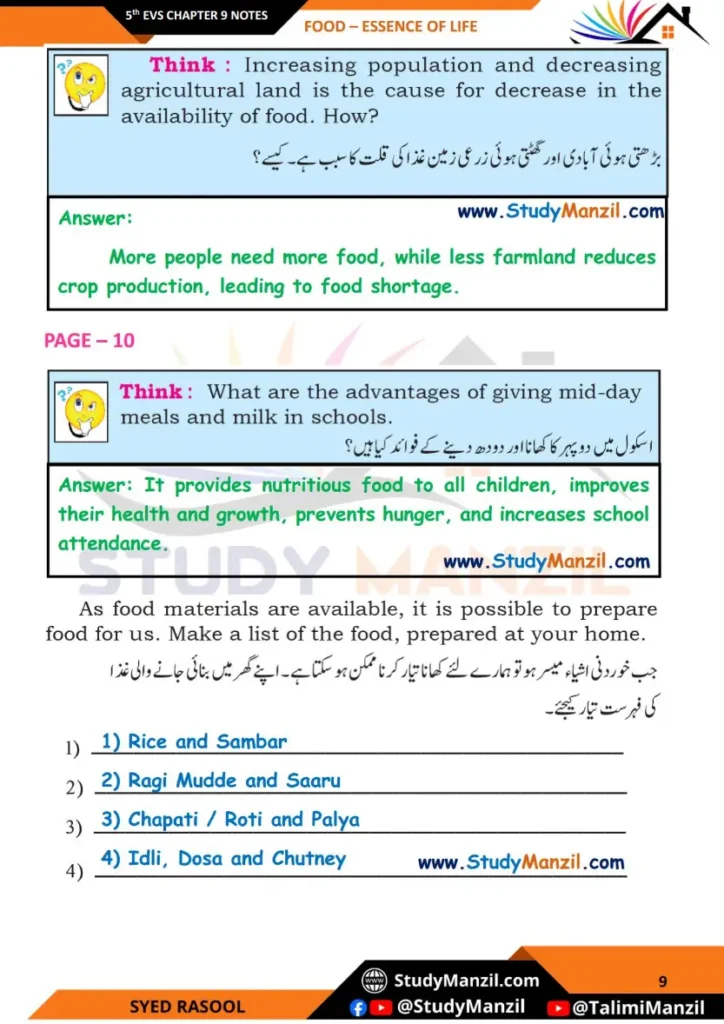
- Giving milk and mid-day meals to children in schools.
- Giving food grains at low prices in Fair Price (Ration) shops.
- Stopping merchants from hoarding food grains.
- Buying crops from farmers, storing them safely in godowns, and distributing them.
6. What Decides the Food We Eat?
Our food habits depend on three main things:
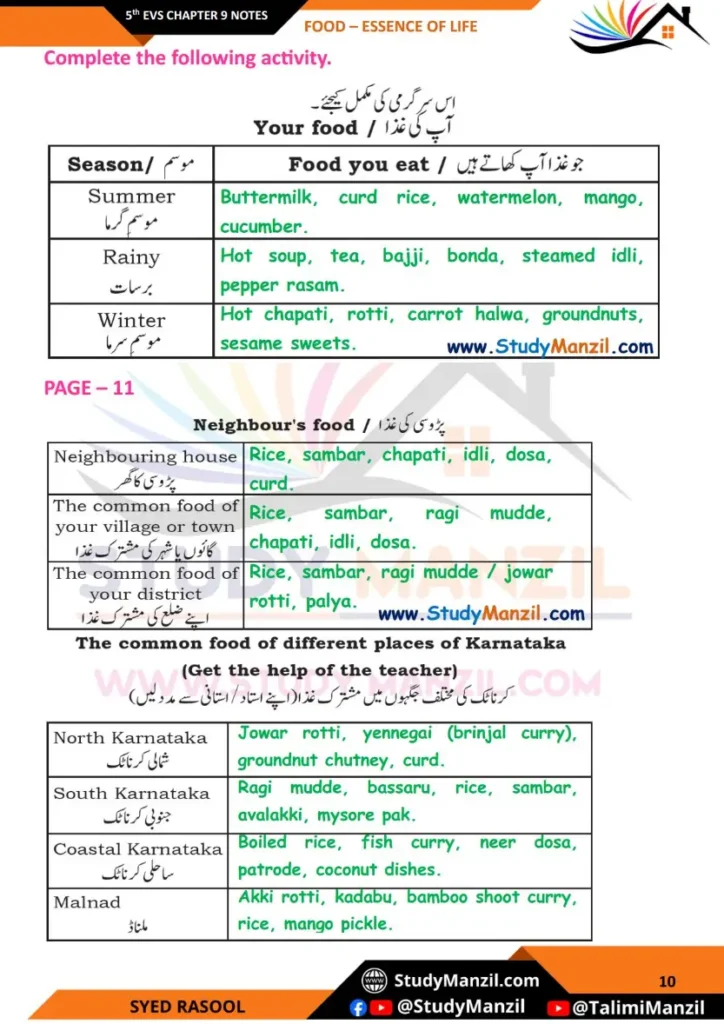
- Climate and crops grown in our area.
- Family traditions and beliefs.
- Seasons (Summer, Rainy, and Winter).
7. Changing Food Habits & Junk Food
- Reasons for Change: TV cooking shows, mobile internet, magazines, advertisements, and cookery books.
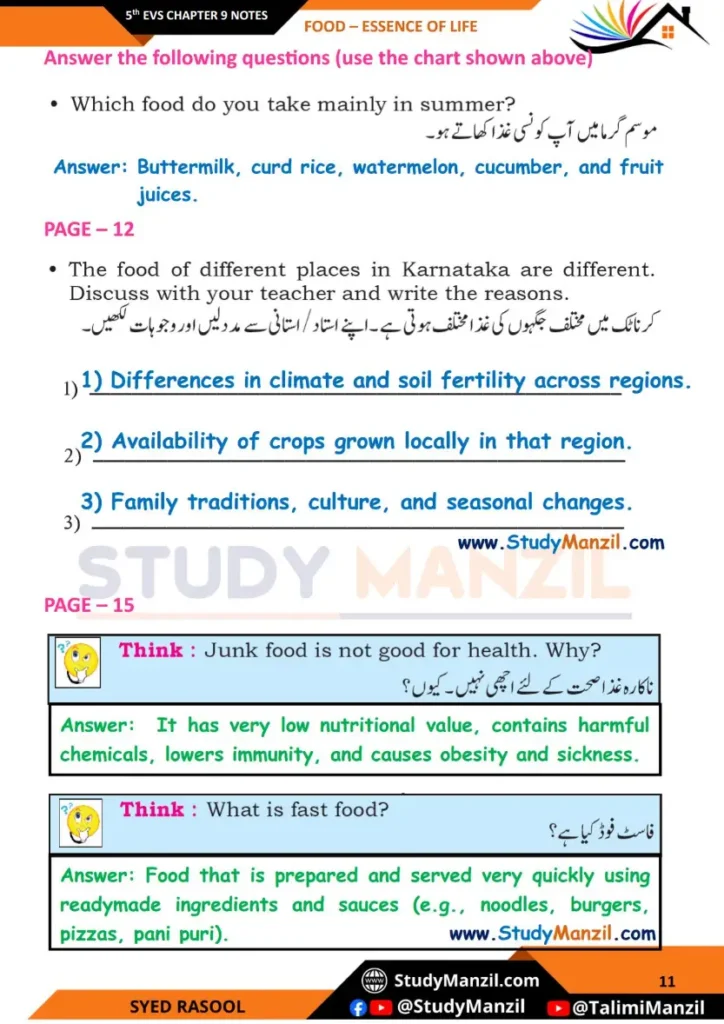
- Junk Food: Food with very low nutrition (e.g., pizza, burger, chips, noodles, ice cream, gobi manchurian, pani puri).
- Bad Effects of Junk Food:
- Harmful chemicals enter our body.
- We fall sick easily and lose the power to fight diseases.
- It causes obesity (overweight).
8. Rules for Buying Food Packets
Always check 3 things on a food packet before buying:
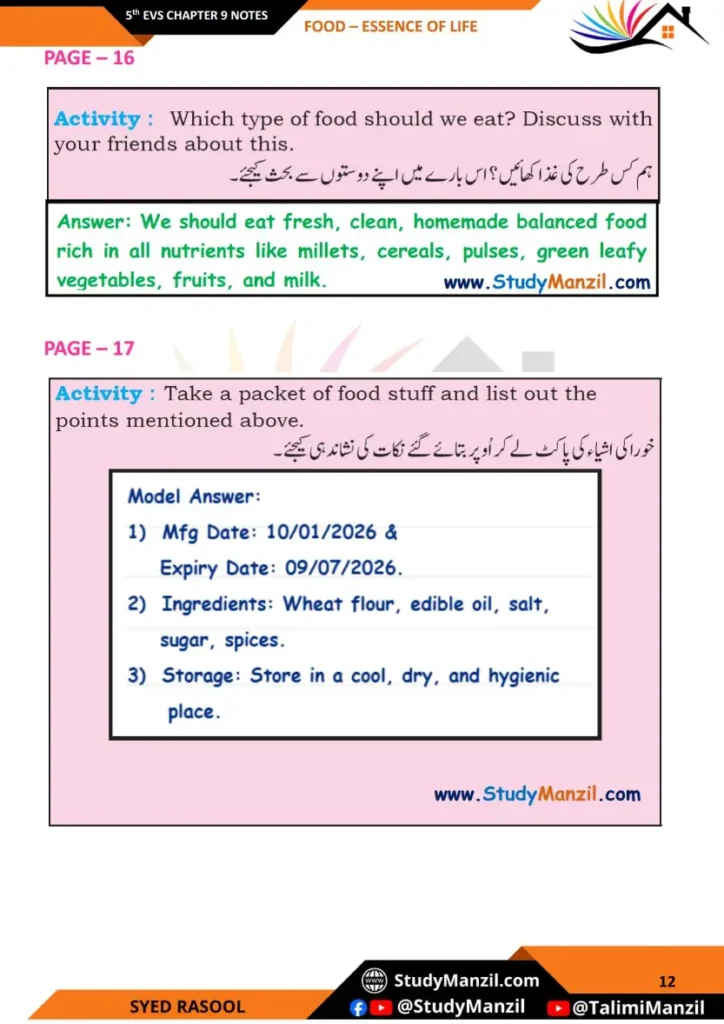
- Manufacturing Date and Expiry Date.
- Ingredients and chemicals added.
- Temperature needed to store the packet.
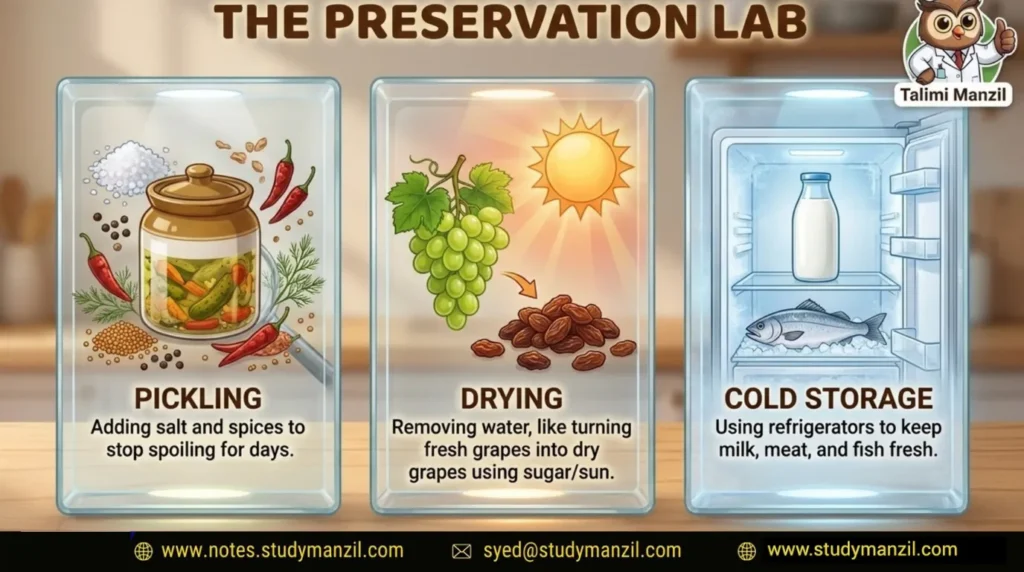
9. Food Wastage & Preservation
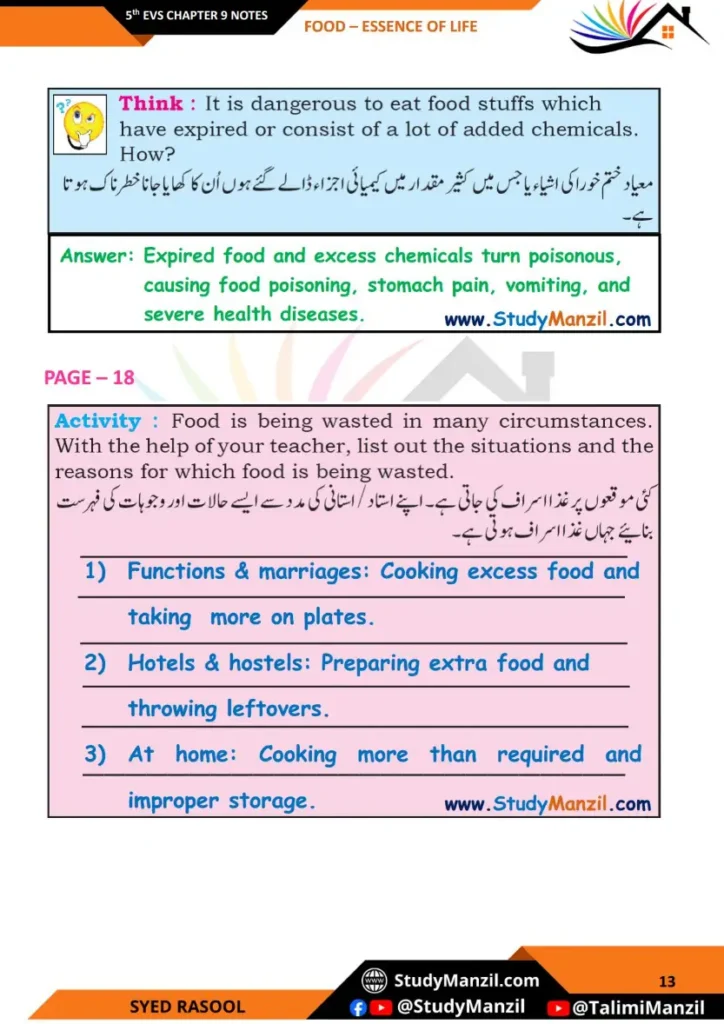
- Wasting of Food: Throwing away good, eatable food is called wasting of food.
- 4 Ways to Preserve Food (Save from Spoiling):
- Salting: Adding salt to preserve pickles.
- Adding Sugar: Using sugar to preserve fresh fruits.
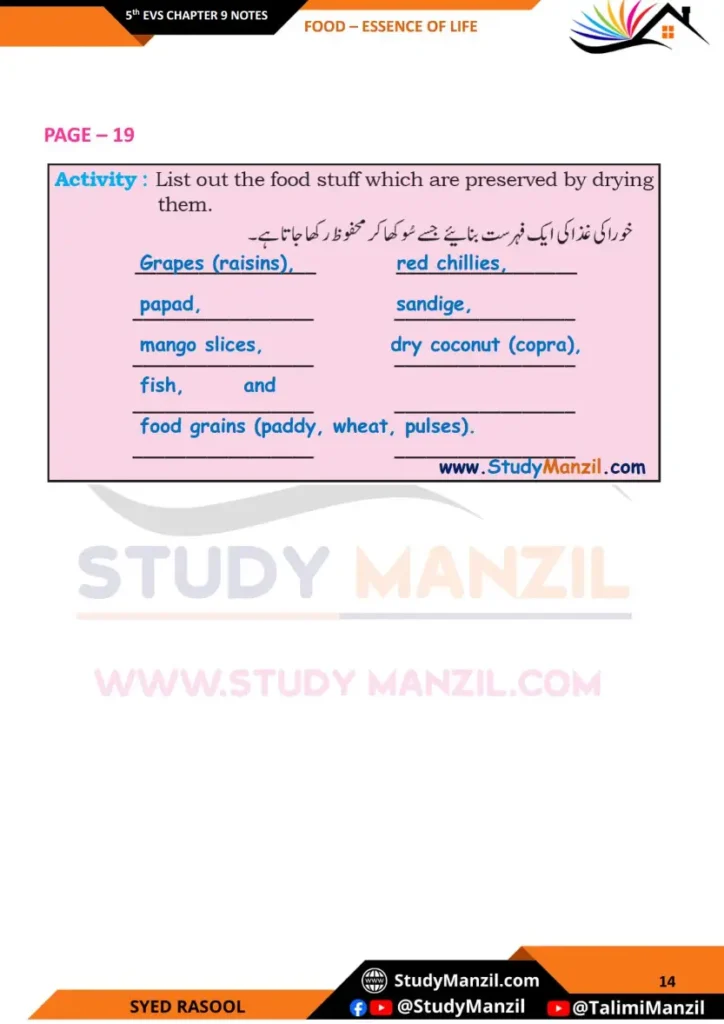
- Drying: Drying food in the sun (e.g., grapes into dry grapes/raisins).
- Cold Storage (Fridge): Keeping milk, fish, and meat at very low temperatures.
Part 2: Page-by-Page Textbook Solutions
PAGE – 1
PAGE – 3
Bilingual Class 5 EVS Chapter 9 Notes Food – Essence of Life | KSEEB Solutions | www.notes.studymanzil.com
PAGE – 4
PAGE – 5 & 6
PAGE – 7 & 8
PAGE – 10
PAGE – 11
PAGE – 12, 15
PAGE – 16 & 17
PAGE – 18
PAGE – 19